
Here are a few examples of mechanisms that can help understand the usages of various components from the Creator's Kit and how they can be used to develop custom mechanisms for your robot.
The Pick and place mechanism is commonly used for tasks that involve picking an object from one location and placing it in another.
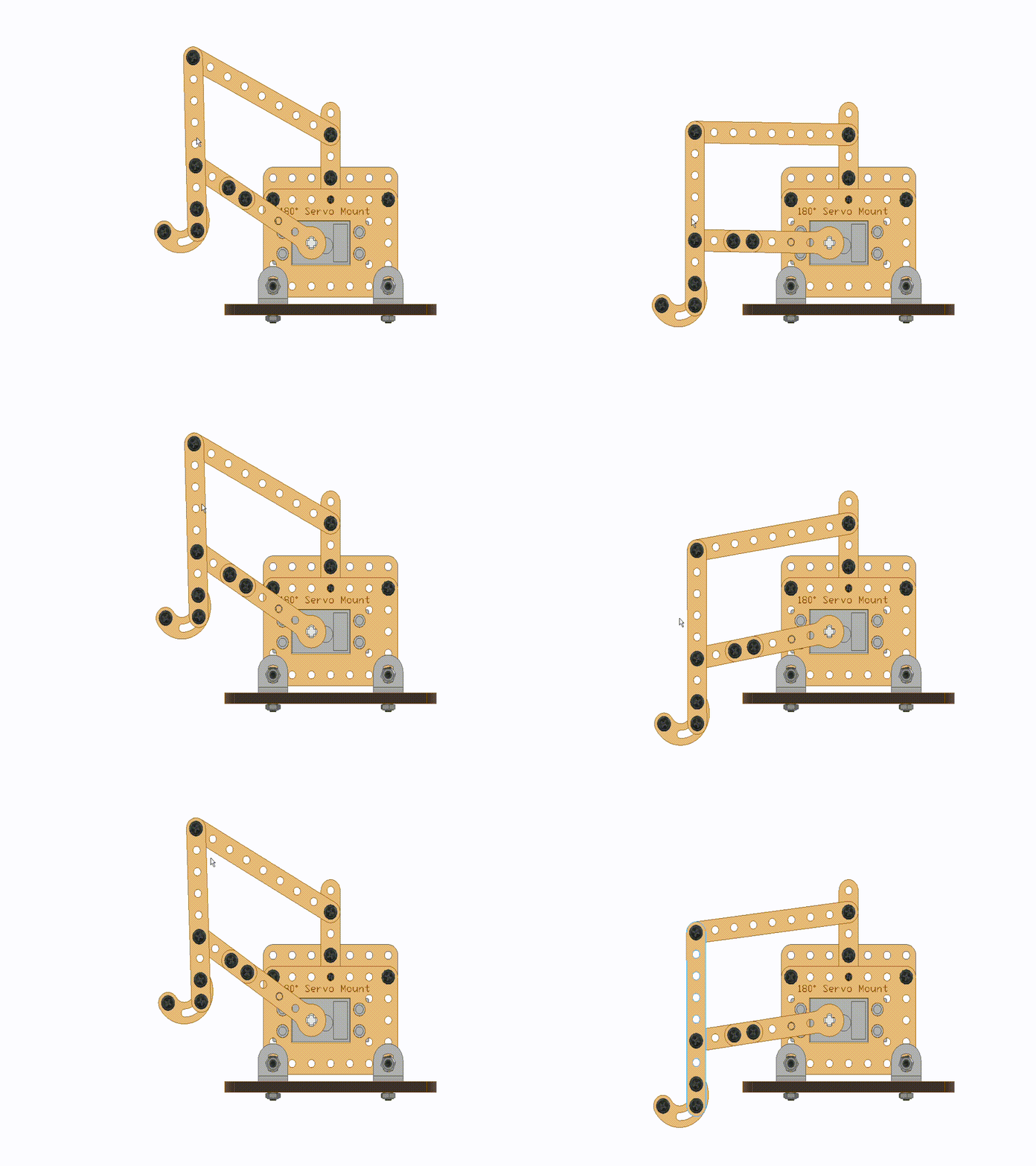
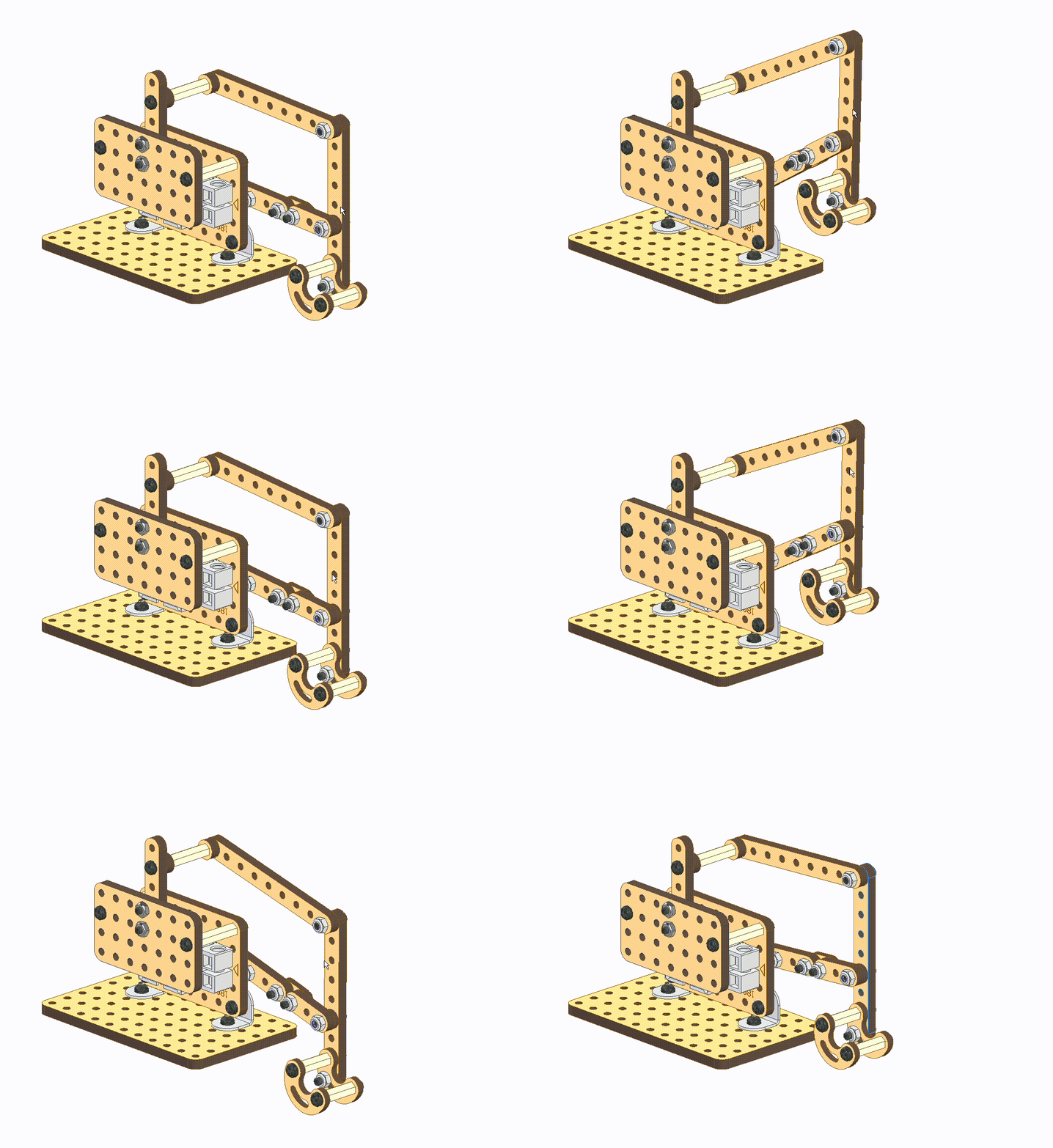
Pick and Place – Parts Used
Pick and Place – Assembly Steps
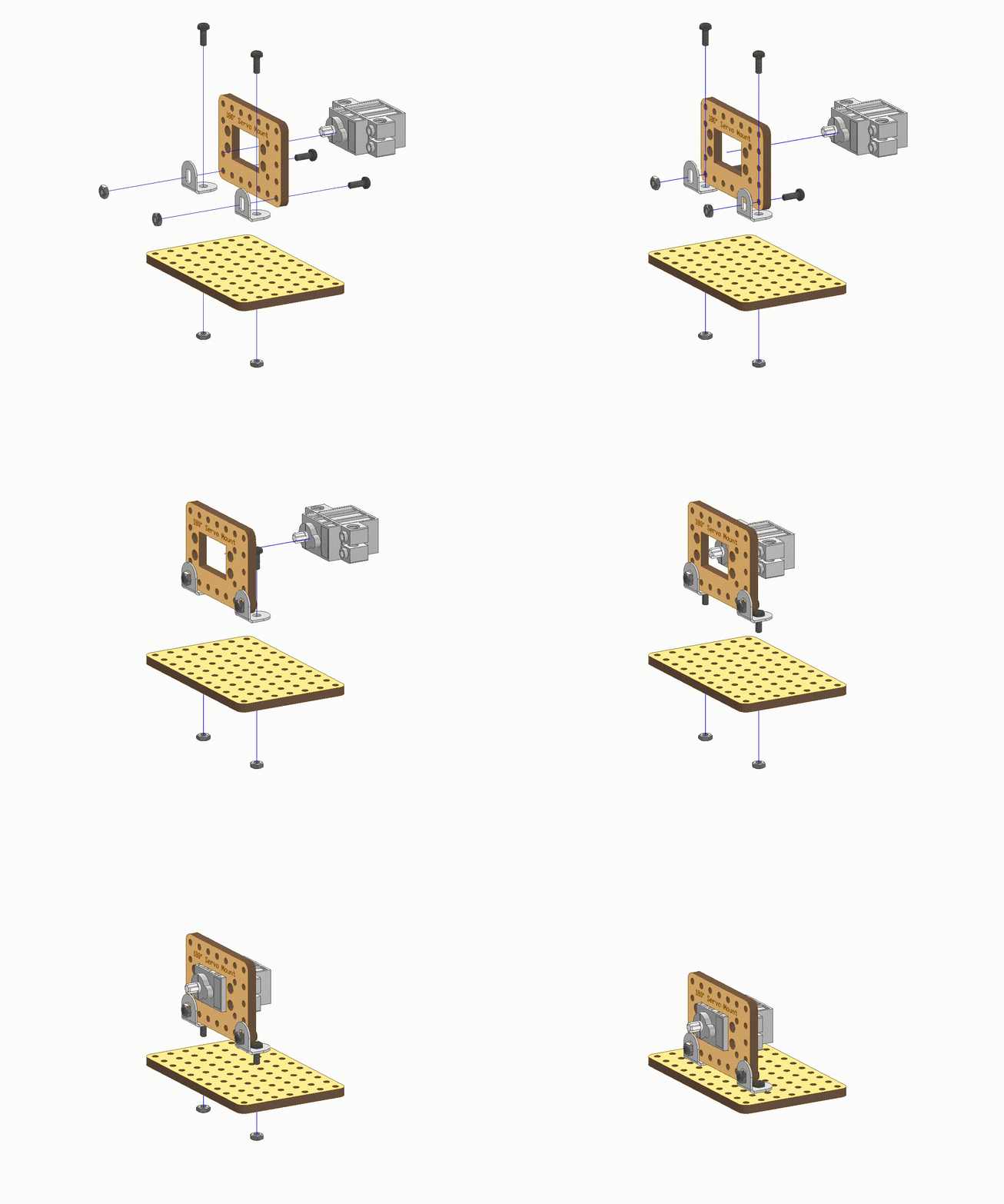
- Assemble the 180° Servo Mount vertically onto a Plate (7-11) using Angle Pieces, M3 Bolts (12mm), and M3 Nuts. Insert the 180° Servo Motor into the 180° Servo Mount. The base of the Pick and Place Mechanism is ready.
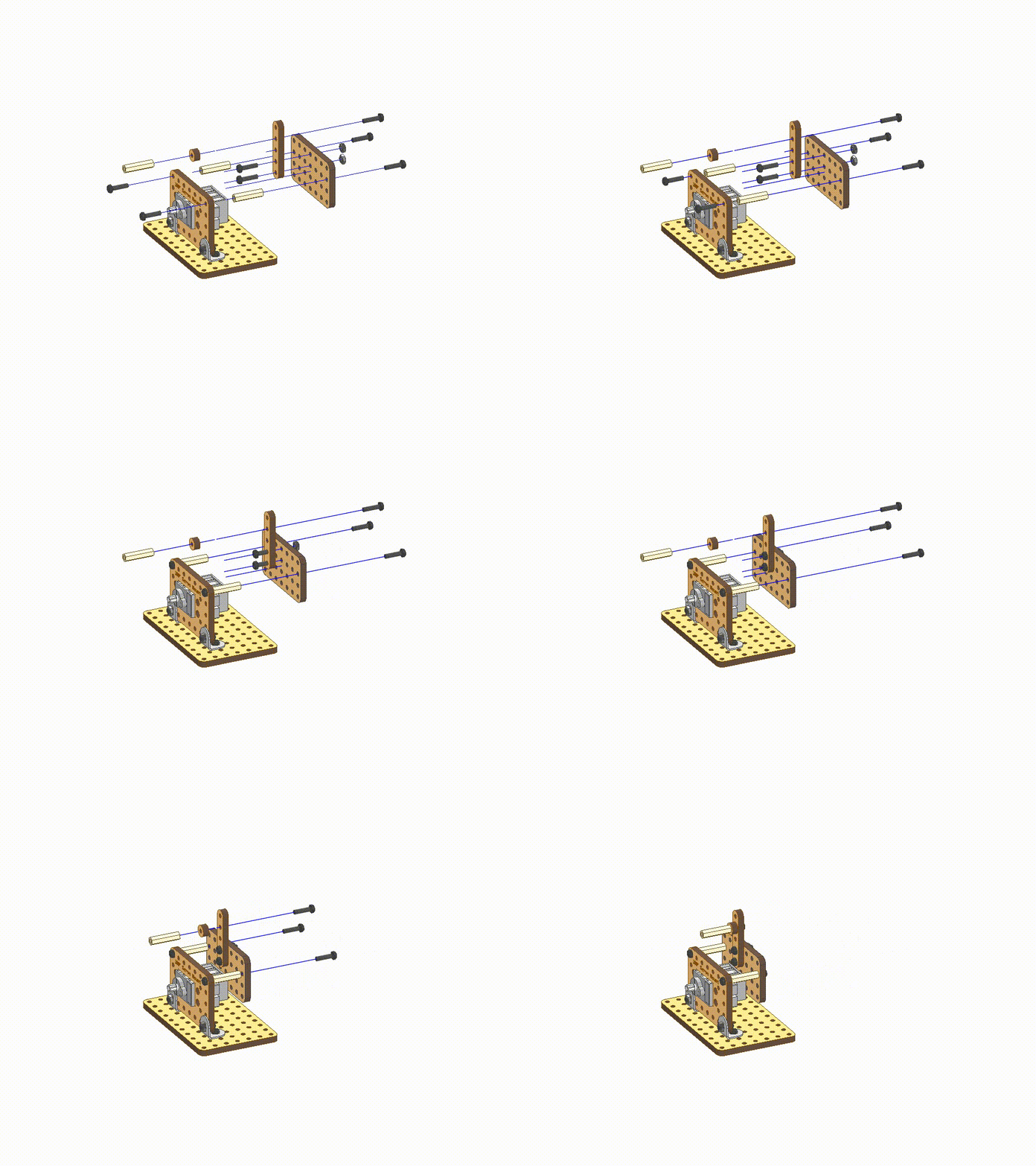
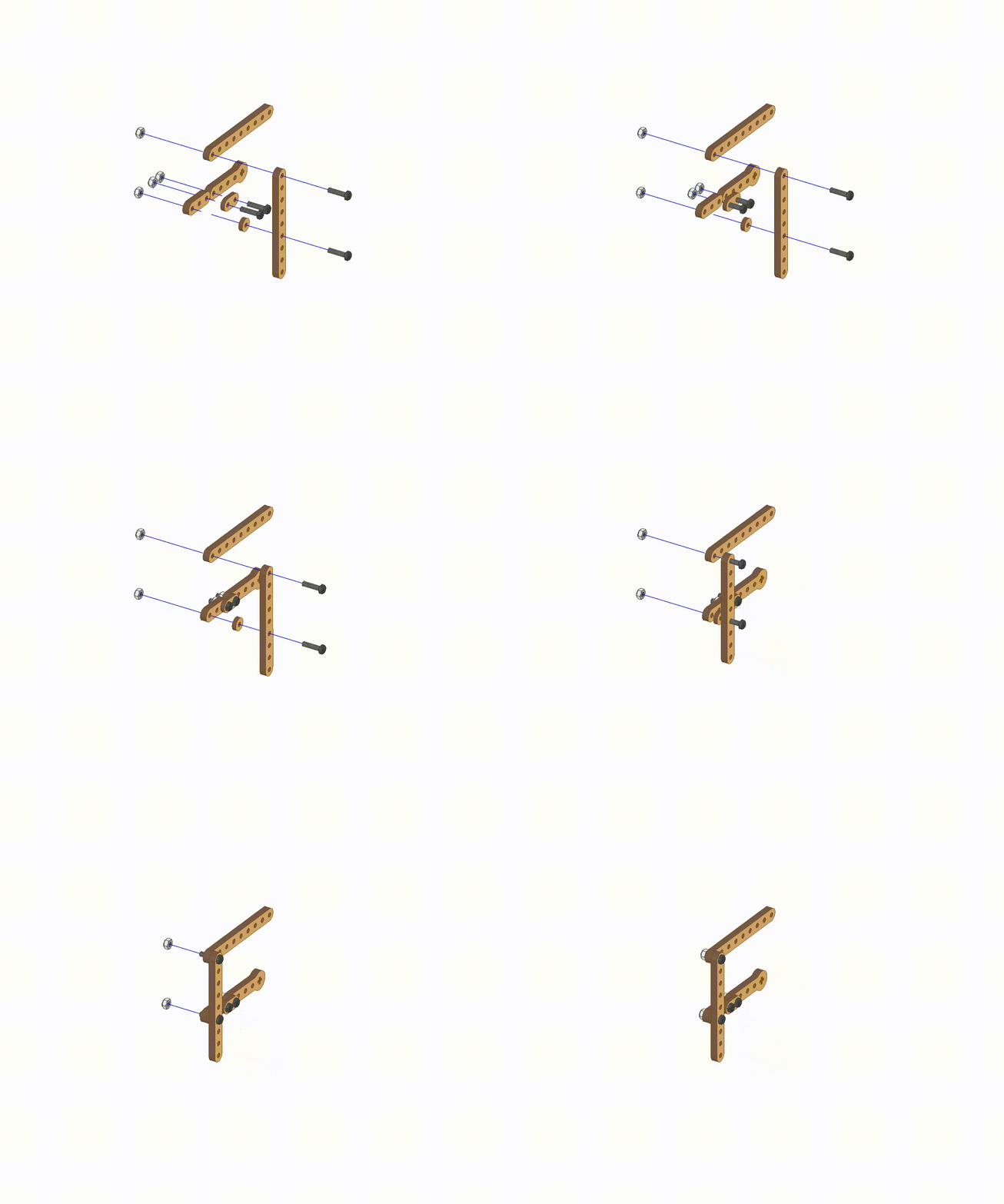
- Attach a Strip (1-5) halfway to the centre of a Plate (7-4) using M3 Bolts (12mm) and M3 Nuts. Attach the top corner holes of the 180° Servo Mount to the middle holes of the Plate (7-4) using M3 Standoff (20mm). Then insert one more M3 Standoff (20mm) along with a Ring spacer (4mm) and M3 Bolt (12mm).
- Now, the second part of this assembly will be to make the parallel linkage. Take a Servo Strip (1-5) and extend its length using Strip (1-2) and Strip (1-3).
- Attach two Strips (1-9) at a 90° angle. Then attach the extended Servo strip to the 6th hole from the top of the vertically attached Strip (1-9).
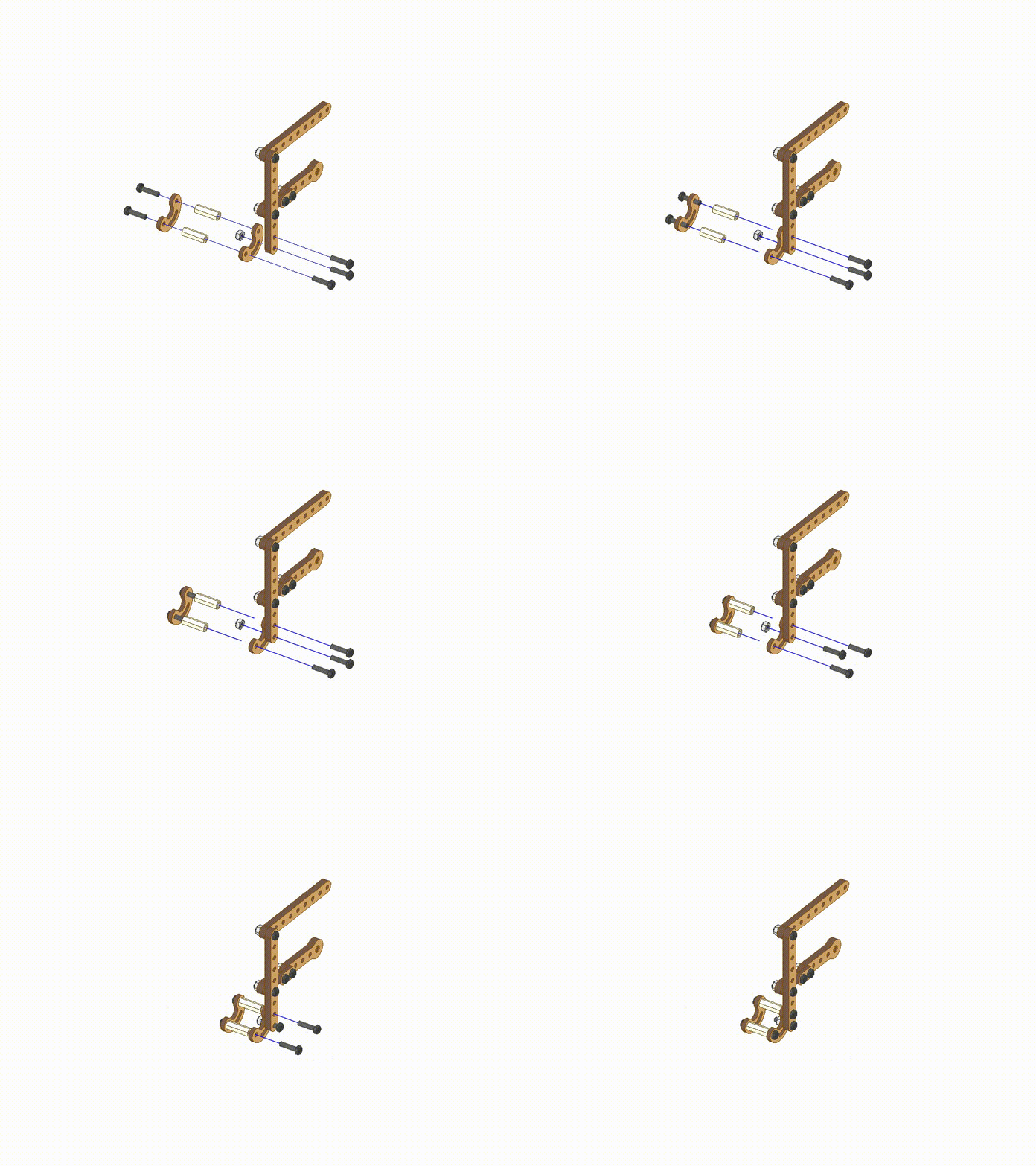
- To make the hook part of the Pick and Place mechanism, you can use the C-Strip.
- Attach one C-strip to the 2nd hole from the bottom of the vertically attached Strip (1-9). Insert one more C-strip and two M3 Standoff (15mm) using M3 Bolts (12mm) and M3 Lock Nut.
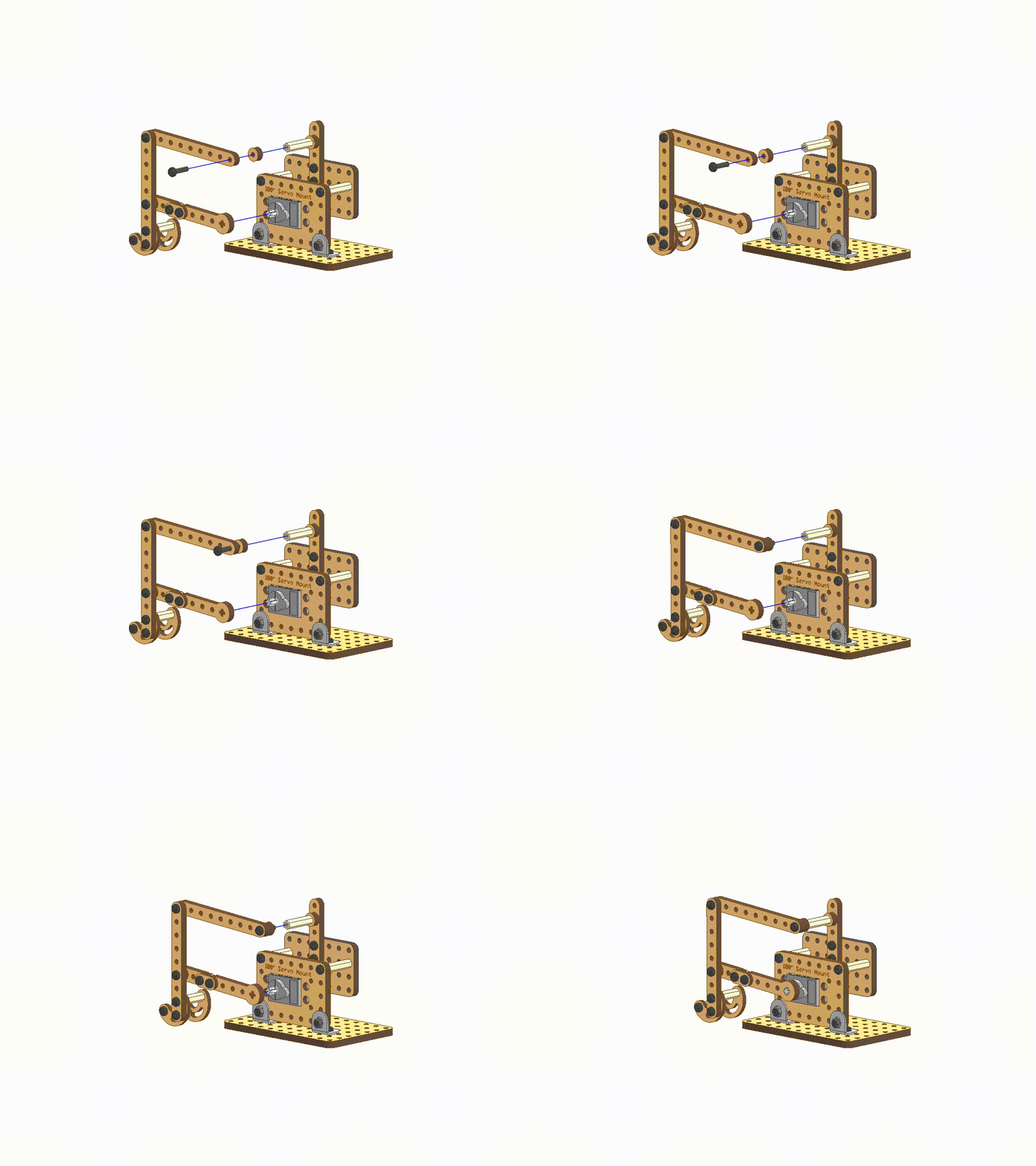
- Attach the assembly of hook and parallel linkages to the base with the Servo Mount assembly using a Ring spacer (4mm) and M3 Bolt (12mm).
- The Pick and Place mechanism is ready to be assembled with your robot.
The Gripper mechanism
The Gripper mechanism is generally used for activities that include changing the placement of objects from one place to another.
Gripper Mechanism
Gripper – Parts Used
Gripper – Assembly Steps
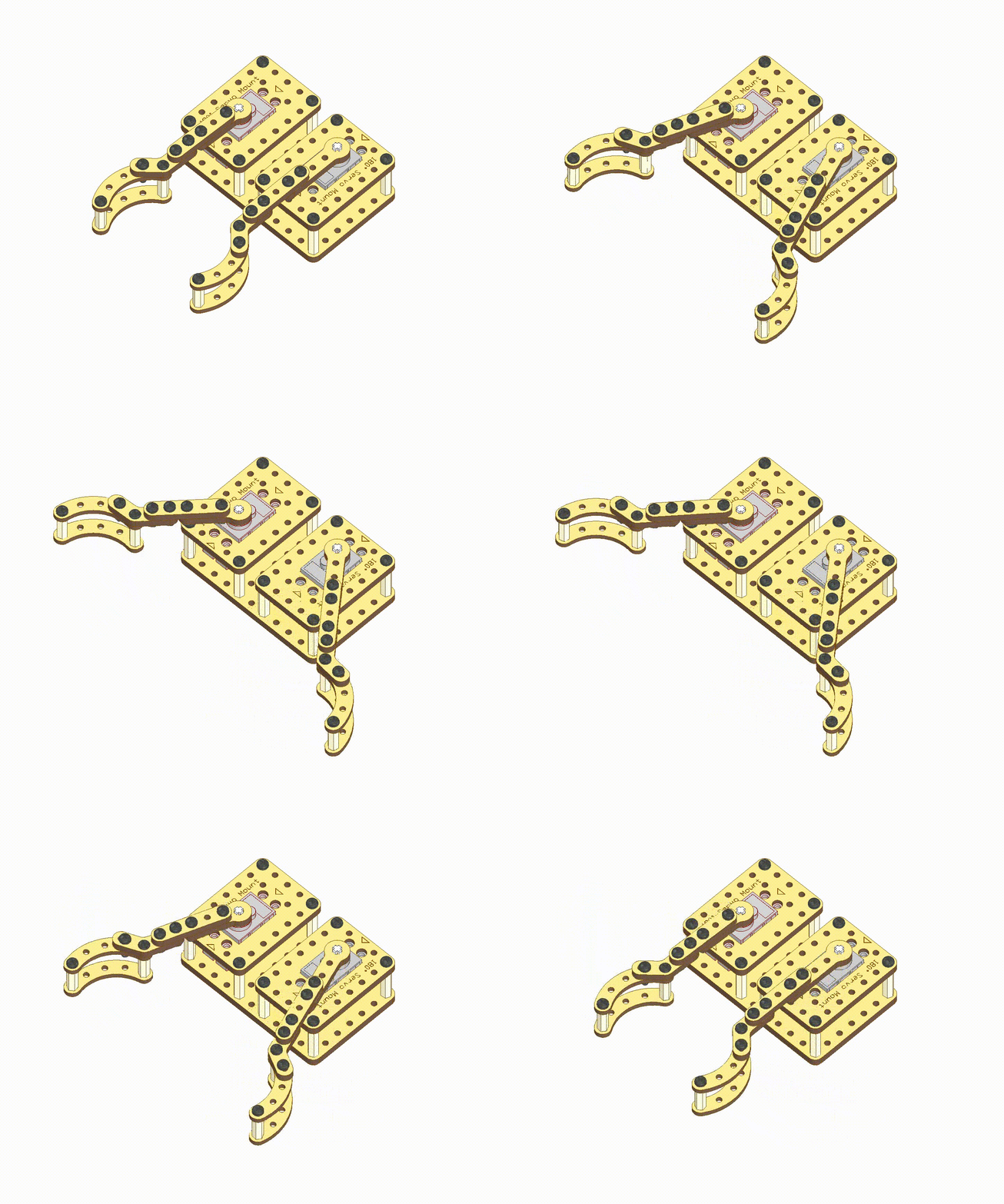
- Assemble the 180° Servo Motors side by side in the opposite direction on a 7-11 Plate using Servo Mounts, M3 Standoffs (20mm), and M3 Bolts (8mm).
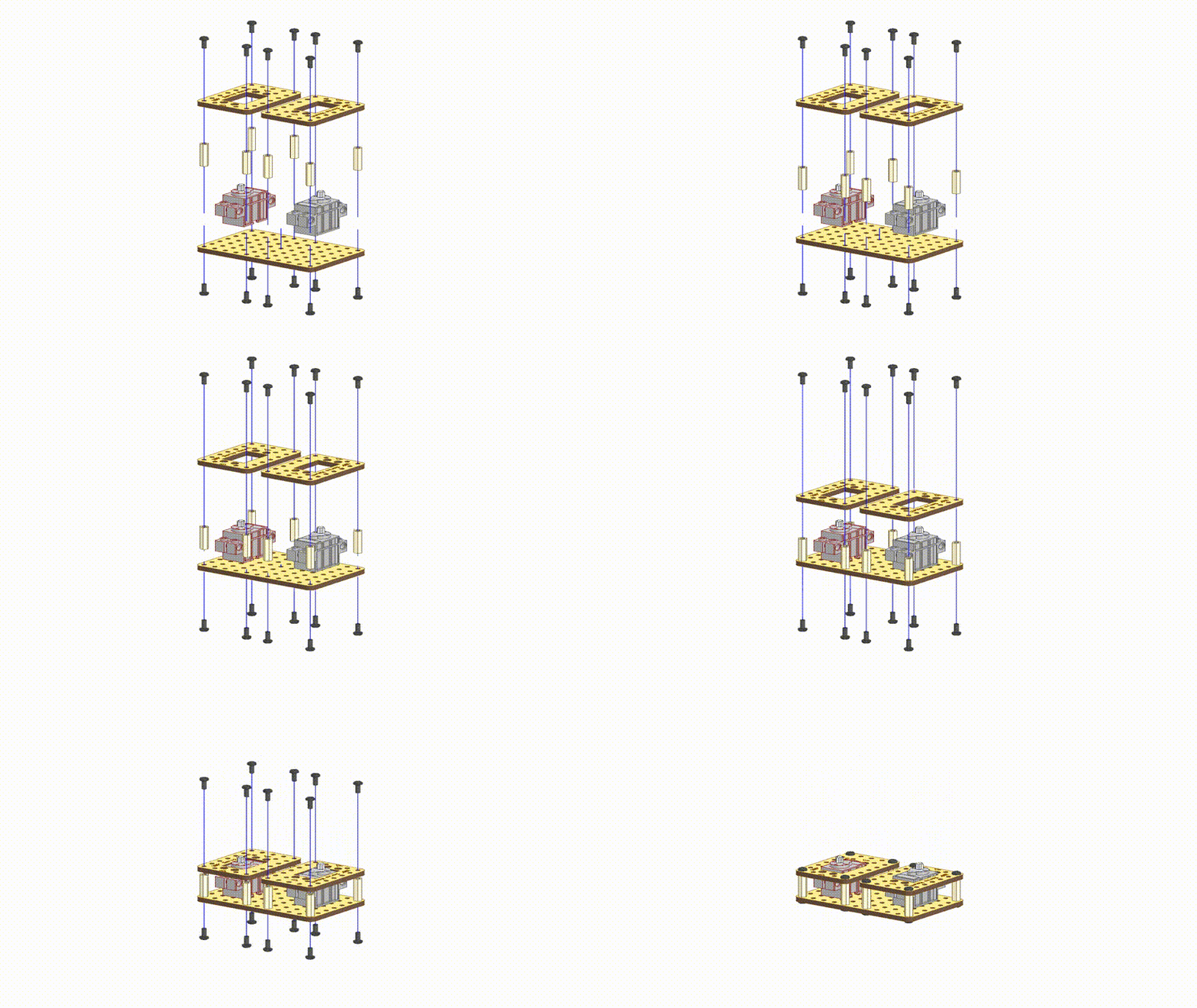
- The base of your Gripper Mechanism is ready.
- The next part to make will be the Gripper Arms. The Gripper Arms is a pair of two arms; almost all the parts used for making them are the same except for the Servo Strips.
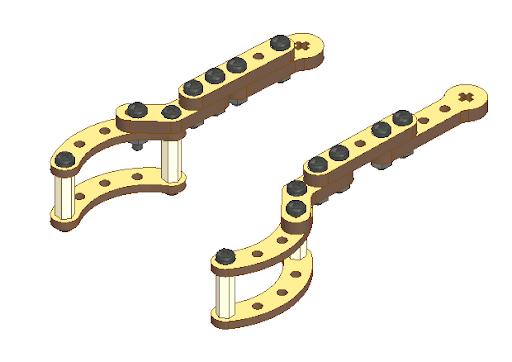
- To make the Claw, it is preferable to use the Curved strips. In this mechanism, we have used four Curved Strips (1-5).
- Attach M3 Standoffs (15mm) between two curved strips to give them a sufficient height to grab objects.
- Use 45° Strips to get a broader angle for the gripper and attach them to the Strip (1-5) using M3 Bolts (12mm) and M3 Nuts.
- Attach the assembly of curved strips with the 45° Strips using M3 Bolts (12mm) and M3 Nuts.
- Since the 180° Servo Motors are opposite to each other, their shafts do not align. For this, we have provided two sizes of Servo Strips: Servo Strip (1-3) and Servo Strip (1-5).
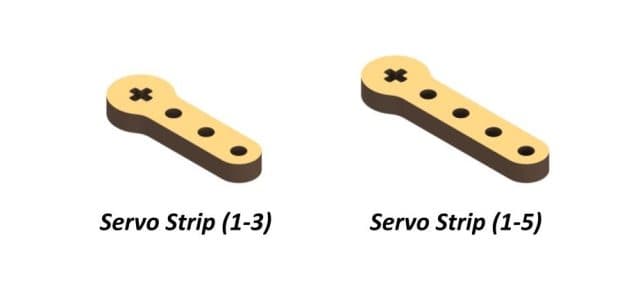
- Keep the end holes of Servo Strip (1-3) and Servo Strip (1-5) in one line and attach a Strip (1-5) using two of its holes using M3 Bolts (12mm) and M3 Nuts.
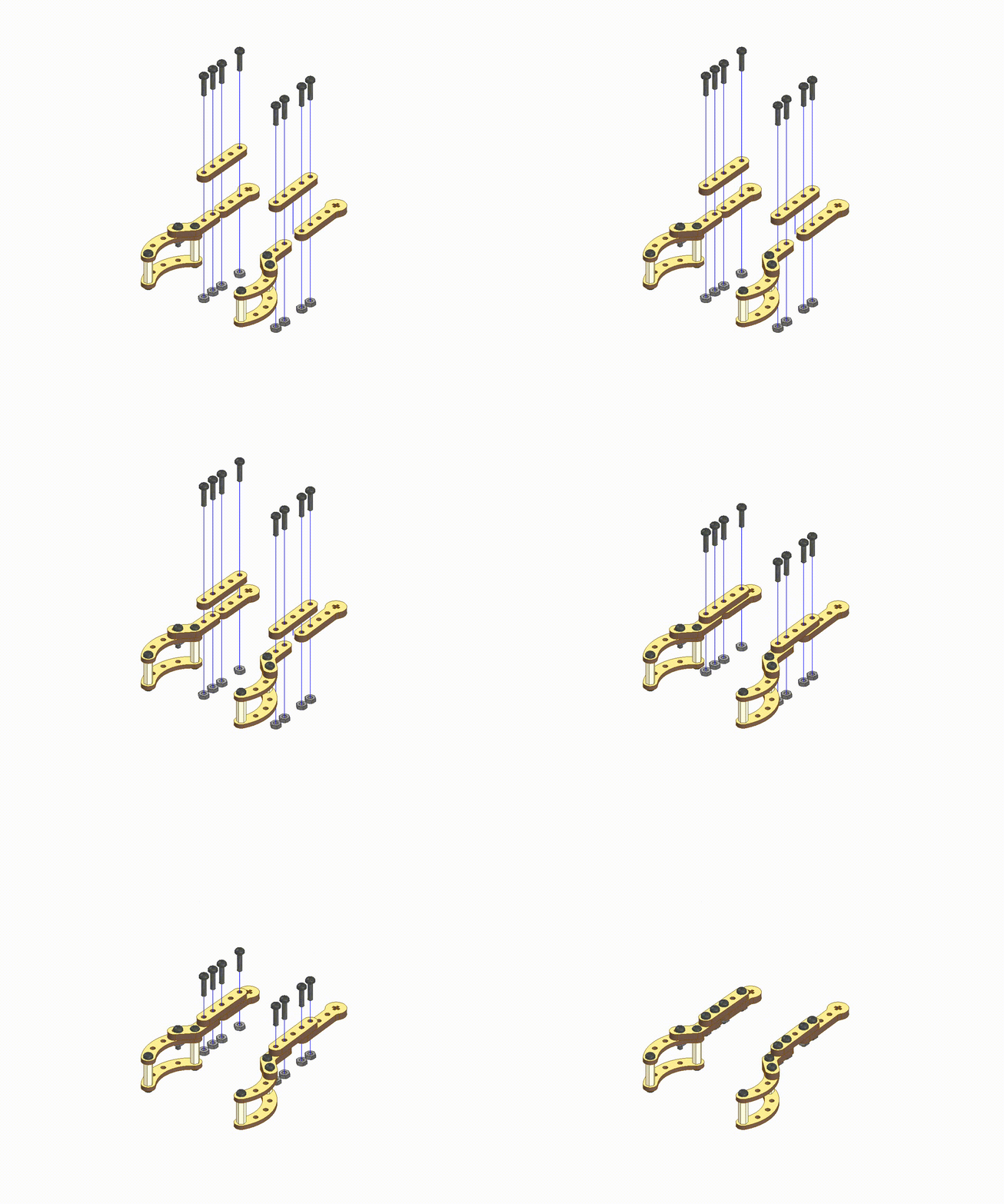
- Now, insert the Gripper Arms into the shafts of the servos as shown.
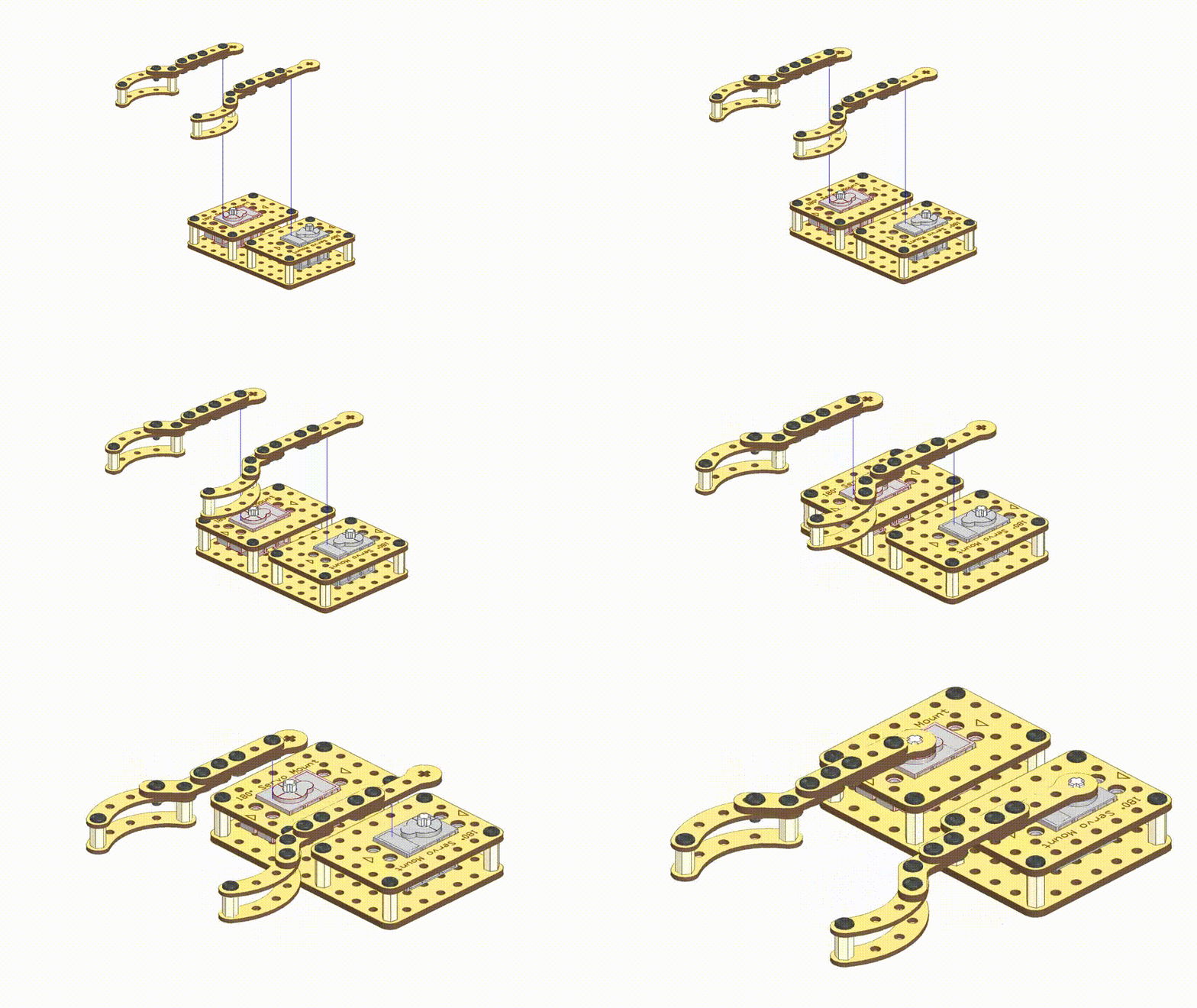
- The Gripper Mechanism is ready to be assembled with your robot.
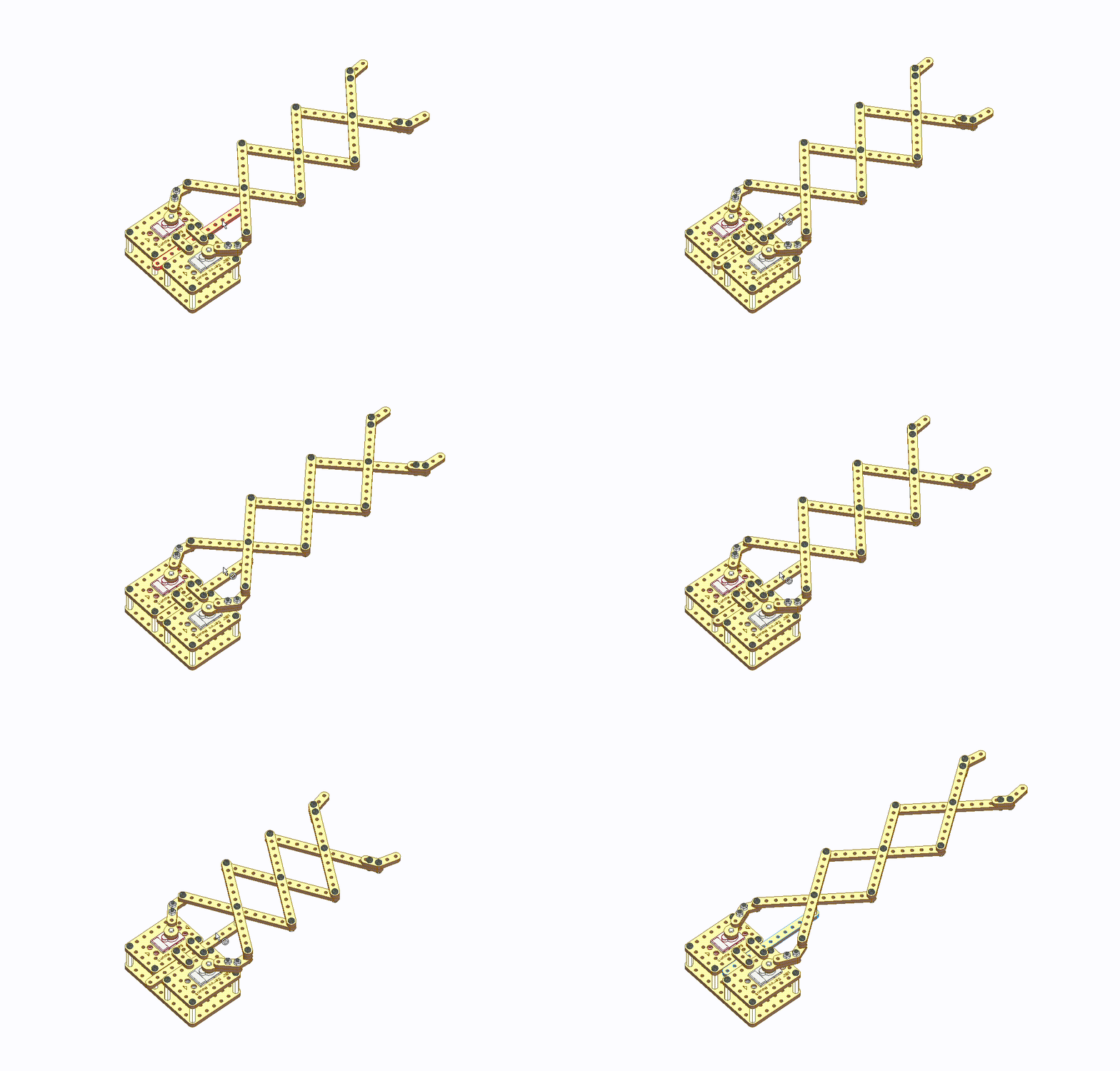
The scissor mechanism is a mechanical linkage system used to create vertical motion or extension. It consists of a series of interconnected, folding supports that resemble the shape of a pair of scissors. The scissor mechanism is widely employed in various applications, including scissor lifts, folding tables, adjustable height platforms, and automotive jacks.
The above-shown scissor mechanism can be made using 'linkage cross joints' and 'linkage corner joints'. 180° Servo Motors can be added at the rear end which will control the motion of the mechanism with their respective shafts.
Scissor Mechanism
Scissor Mechanism – Parts Used
Scissor Mechanism – Assembly Steps
- Place the 180° Servo Mounts side by side in the same direction. Connect them at the 2nd and 4th holes, with two Strip (1-3) on top and two Strip (1-3) at bottom.
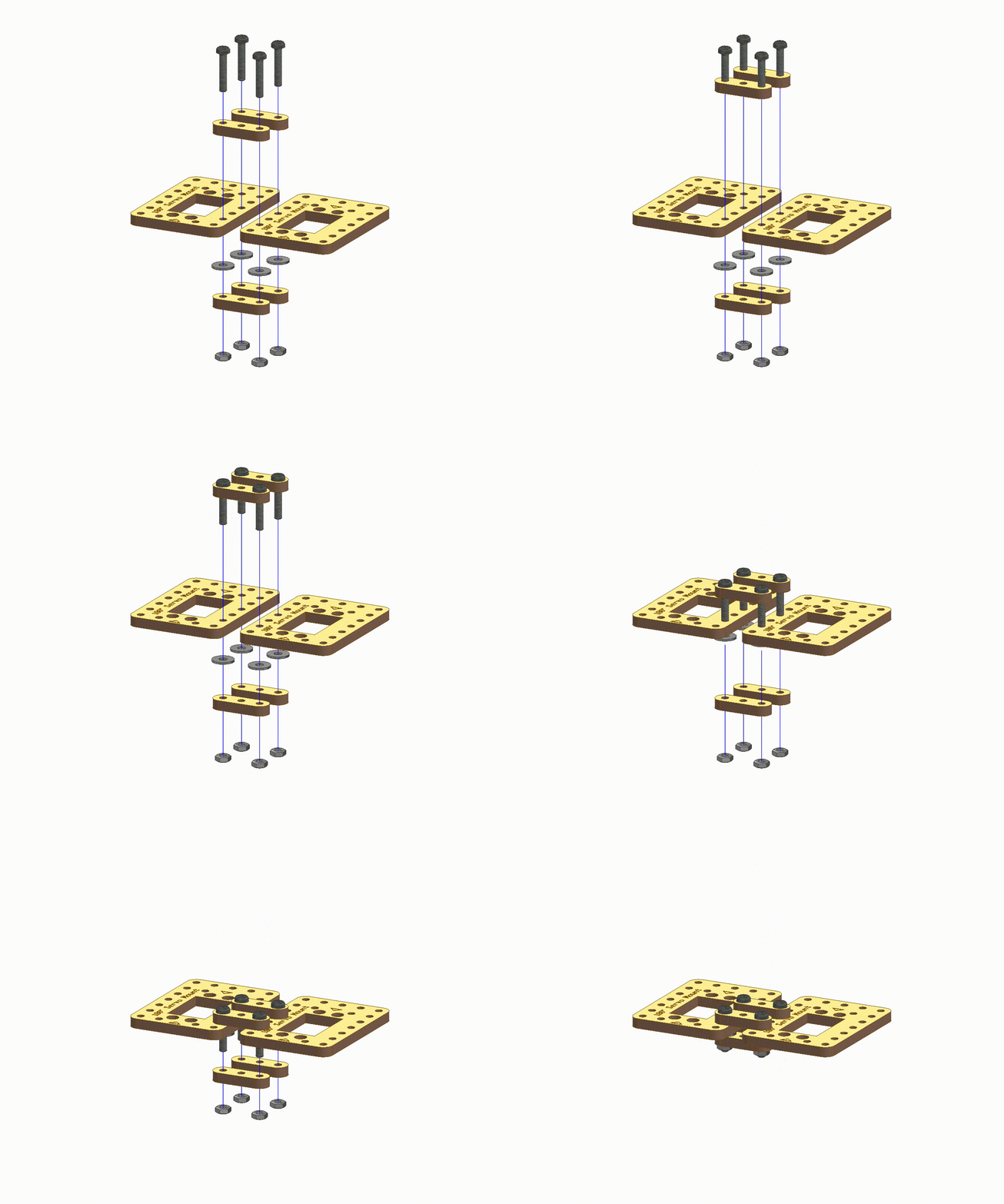
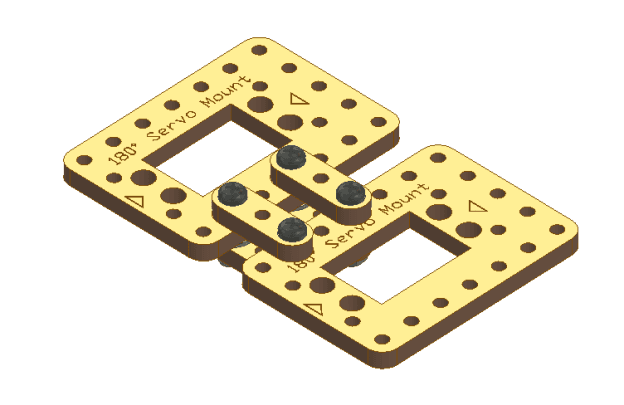
- Assemble the 180° Servo Motors side by side in the opposite direction on a Plate (7-11) using the assembly of Servo Mounts, M3 Standoffs (20mm), and M3 Bolts (8mm).
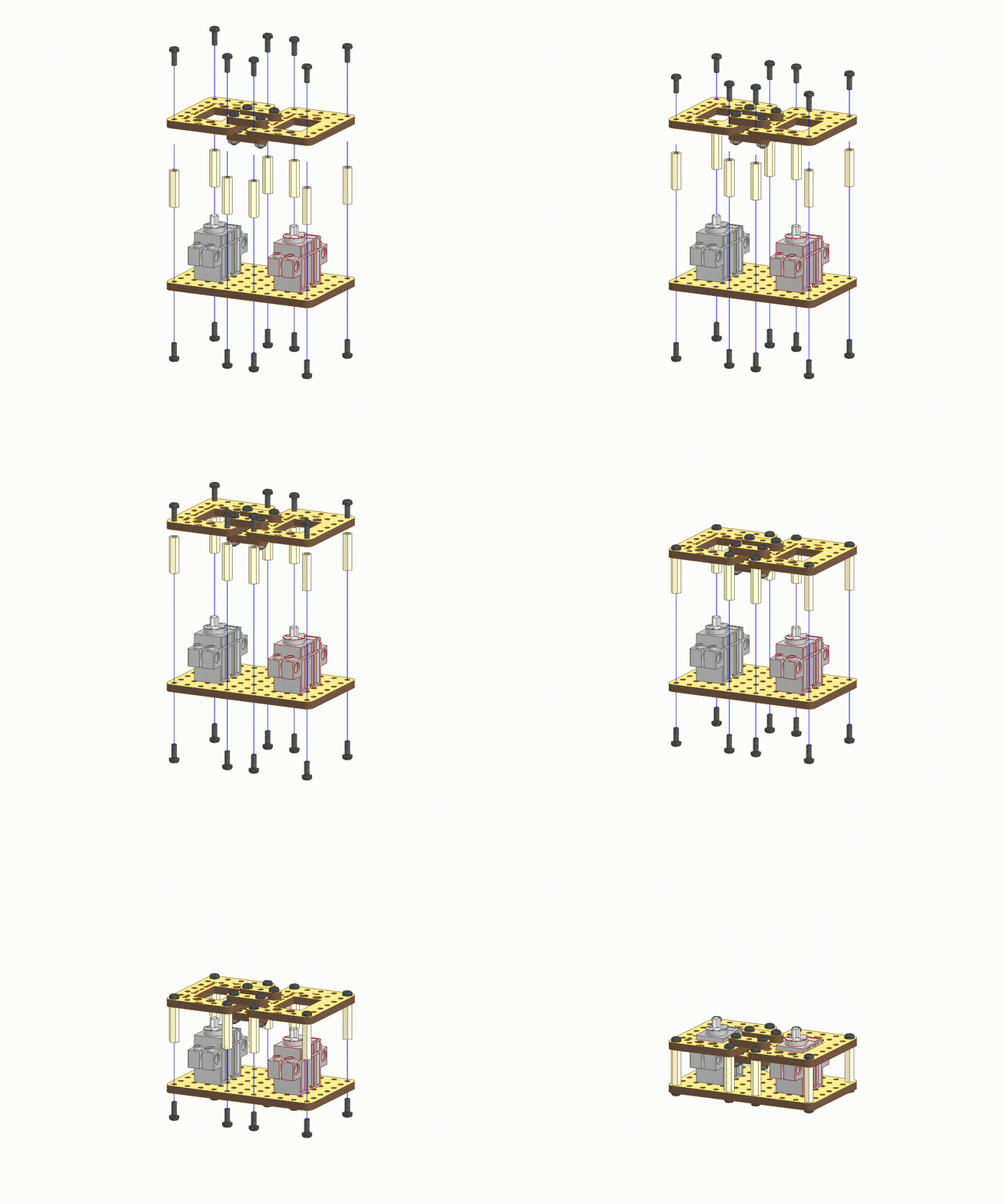
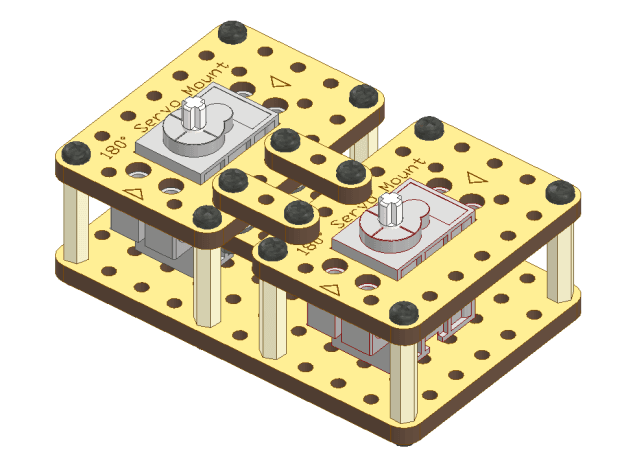
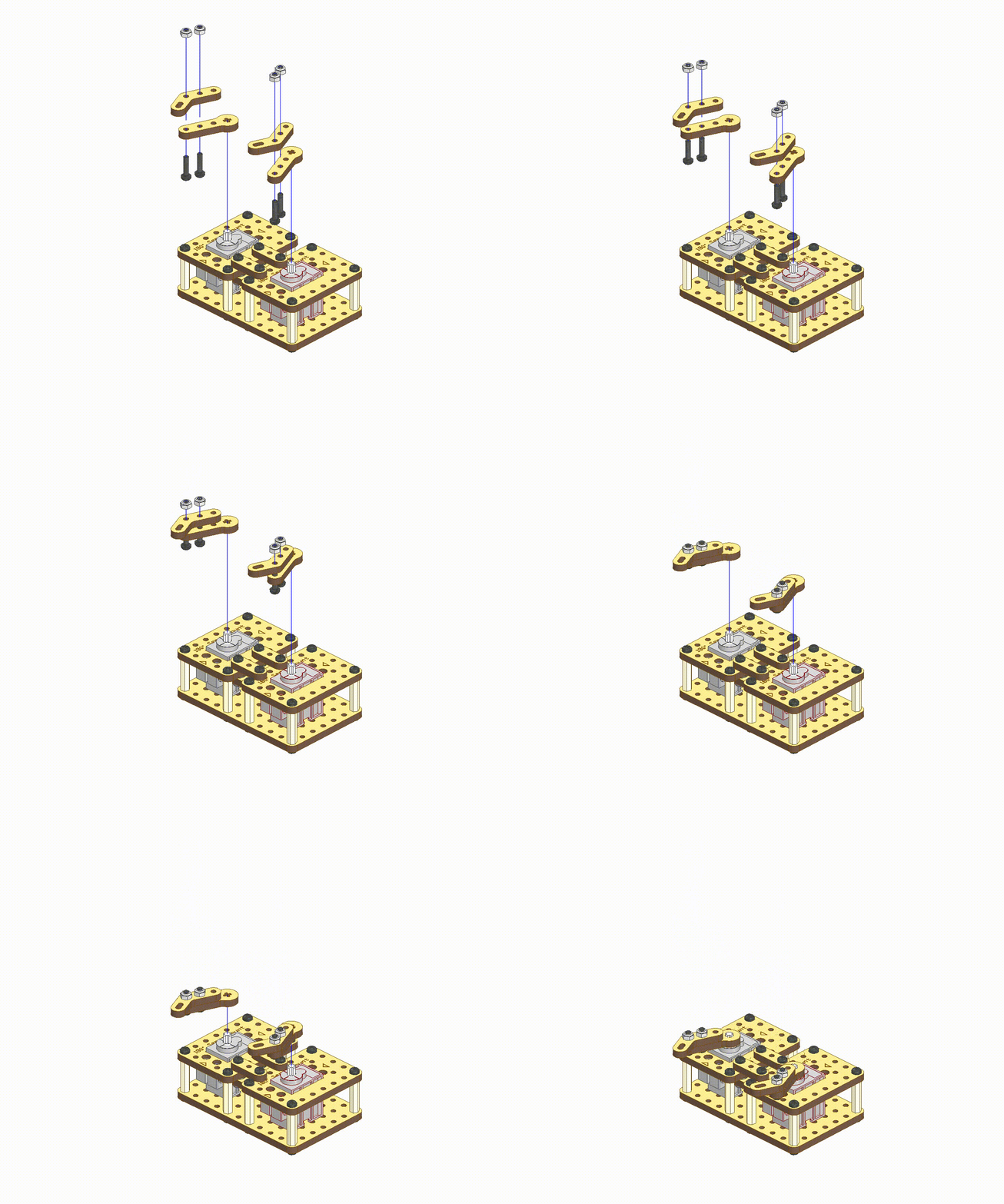
- Attach two 45° Strip (3-2) to each of the Servo Strips (1-3) using M3 Bolts (12mm) and M3 Nuts. Ensure that the fasteners are inverted. The extended arm with servo shafts is ready.
- Next for the main scissor mechanism linkages, take six Strips (1-13) and connect them at their endpoints and midpoints in a zig-zag pattern using parallel linkages at equal distances.
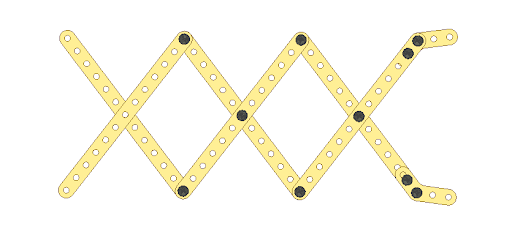
- Insert M3 Bolts (12mm) and M3 Lock Nuts at the intersections. The M3 Lock Nuts will help with the movement of the linkages without getting loose.
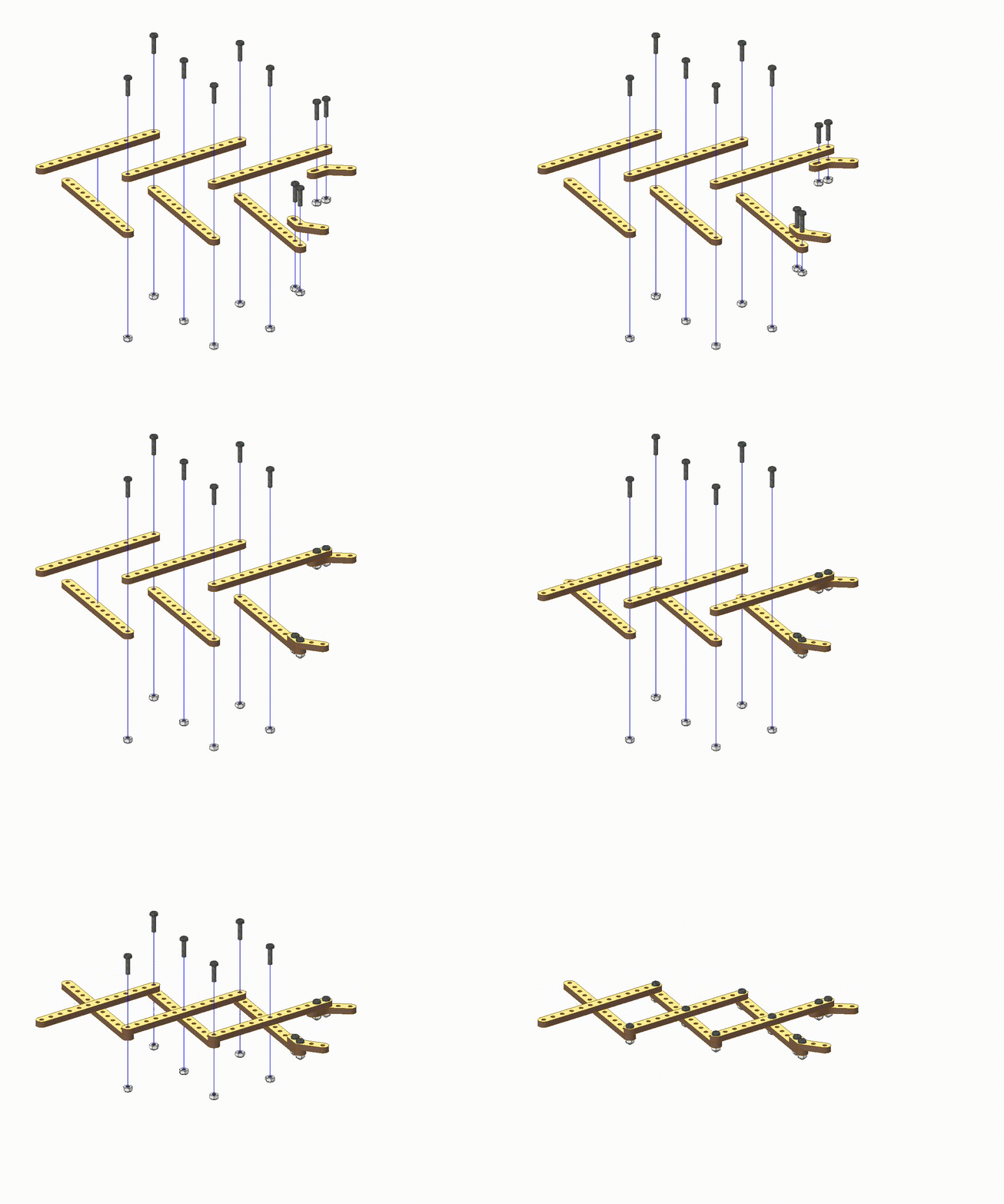
- Attach two 45° Strips (3-2) to one end of the linkages. (You can attach your custom gripper or claw there.)
- Attach the last holes of the linkages to the extended shafts of the 180° Servo Motors.
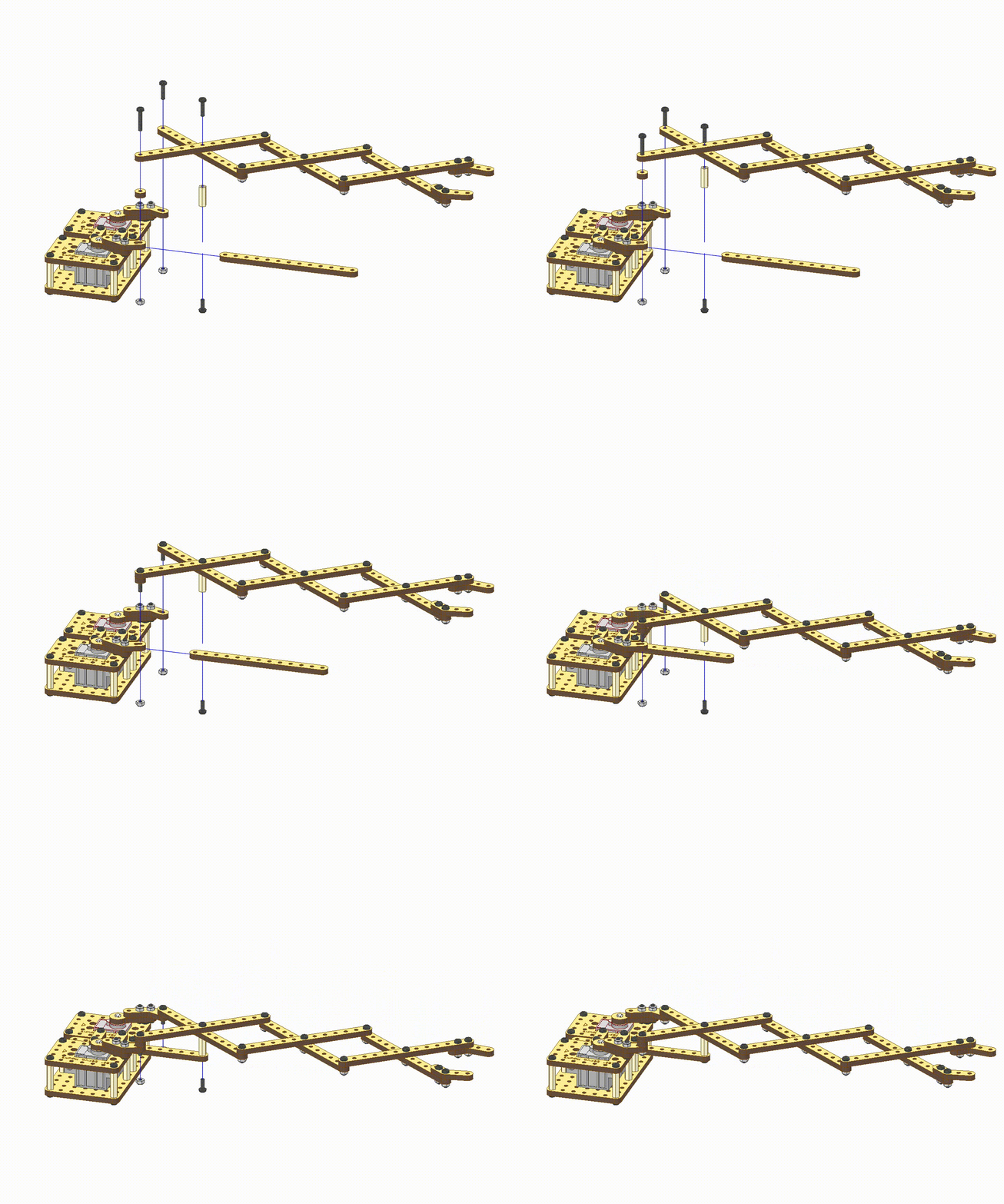
- Slide in a Strip (1-13) into the space between Servo Mounts. This Strip (1-13) will be used as the axis for this assembly and will work as the sliding joint for the scissor mechanism.
- Insert an M3 Standoff (15mm) in the middle of the linkage cross joint and the first hole of the sliding Strip (1-13). Use M3 Bolts (12mm) at both ends to connect the M3 Standoff (15mm).
More Open Resources
- Machine Learning Environment: Image Classifier
- Exploring Quarky Sensors
.webp&w=3840&q=75)
.webp&w=3840&q=75)
.webp&w=3840&q=75)
.webp&w=3840&q=75)
.webp&w=3840&q=75)